

Installation guide
How to Install Surface-Mount (Fixed) Bollards
A surface-mount bollard is bolted to the top of the slab through its base plate, so the job comes down to a sound surface, the right anchors and clean, correctly sized holes. Here's how to install bollards on concrete, what to do on asphalt or pavers, and how to choose between mechanical and chemical anchors.
Updated 8 October 2026
Short answer: To install a surface-mount bollard, check the slab and services, mark the holes through the base plate, drill to the anchor maker's diameter and depth, clean every hole, set the anchors and tighten to the datasheet torque. For SafeWise fixed bollards that typically means M10 concrete anchors, 100–150mm long depending on slab thickness. Mechanical anchors load immediately. Chemical (resin) anchors must cure first.

What you'll need
- Fixed bollards — 90mm or 140mm, with the base plate already fitted.
- M10 concrete anchors, typically 100–150mm long depending on slab thickness, mechanical or chemical. Anchors aren't included with SafeWise bollards.
- Hammer drill and masonry bit in the diameter the datasheet calls for.
- Hole-cleaning kit — a stiff round brush and a blower or hand pump.
- Resin, dispenser and nozzles for chemical anchors.
- Torque wrench and sockets, plus a spirit level, tape and marker.
- Service locating — a BYDA enquiry and a slab scanner.
- PPE — eye and ear protection and a dust mask.

Before you start
Is the surface suitable for a fixed bollard?
Sound concrete slab
Look for cracks, crumbling edges and patched areas where each bollard will sit. Anchors are only as good as the concrete around them. Thin or old slabs need a qualified installer to assess them before you drill, particularly for the 140mm bollard, which is 1300mm tall and puts more leverage on the anchors when something leans on it.
Asphalt, pavers and soft ground
Concrete anchors don't hold in asphalt, pavers, gravel or soil. These surfaces need a concrete footing or plinth underneath, with the base plate anchored into that. Its size depends on the ground, the bollard and what's likely to hit it, so have an engineer or experienced installer size it. If you're pouring new concrete anyway, compare a cast-in removable bollard.
Edge distance and slab thickness
Too close to a slab edge, joint or corner and the concrete can break out instead of the anchor holding. The anchor datasheet gives the minimum edge distance, anchor spacing and slab thickness, so work to those figures, not a rule of thumb. A position close to an edge is one case where chemical anchors are often chosen.
Underground services
Lodge a Before You Dig Australia (BYDA) enquiry before any drilling and scan the slab where there's doubt. Power, water, gas, communications and reinforcing steel can all be in or under a slab.
Council permits
On private property you usually don't need council consent, but check strata or owners corporation rules and any planning overlay. Work on a footpath, nature strip or road reserve generally needs council consent or a permit, so ask first.
Anchors
Chemical anchor vs mechanical anchor for a bollard
Both can hold a bolt-down bollard. The right one depends on the concrete, the edge distance and how soon you need to use it.
| Mechanical (expansion, sleeve, wedge) | Chemical (resin) | |
|---|---|---|
| Use when | The concrete is sound and the bollard sits well back from any edge. | The base plate is close to an edge, the concrete is older or softer, or the bollard may be knocked repeatedly (cyclic loads). |
| Pros | Quick to install. Can be loaded straight away. | Suits edge-close positions and older or softer concrete. Copes better with repeated loading. |
| Cons | Expands against the hole, so it relies on sound concrete and the datasheet edge distances. | Needs a brushed, blown-out hole and cure time before loading, longer in cold or wet holes. More steps. |
If you can't tell whether the slab is sound enough for expansion anchors, get it assessed. Either way, take hole diameter, depth, edge distance and torque from the anchor maker's datasheet. They change between brands and anchor types.
Method
How to install bollards on concrete, step by step
These steps suit both anchor types. Where they differ, it's flagged.
-
1. Check services and the slab
Lodge a Before You Dig Australia (BYDA) enquiry and scan the slab for services and reinforcement. Check the concrete for cracks, crumbling edges and old patches, and confirm any council or strata approval first.
-
2. Set out the positions
The base plate is Ø225mm on the 90mm bollard and Ø250mm on the 140mm, so keep the whole plate on sound concrete, clear of slab edges and joints. Check gaps and distance from path edges against the bollard spacing guide, then mark each centre point.
-
3. Mark the holes using the base plate
Stand the bollard on its mark with the base plate flat on the slab, and mark each hole through the plate. That's more accurate than measuring. Then move the bollard aside.
-
4. Drill to the anchor maker's diameter and depth
Use a hammer drill with the bit diameter on the anchor datasheet, drill to the stated depth and keep the drill square. If the bit hits reinforcing steel, stop and ask your installer or engineer about moving the hole.
-
5. Clean every hole
Brush each hole with a stiff round brush, then blow it out with a blower or hand pump, repeating as the datasheet says. This is critical for chemical anchors: dust stops the resin bonding, and a wet hole cures more slowly. It matters for mechanical anchors too.
-
6. Set the anchors
Follow the anchor maker's method. Mechanical anchors are normally driven through the base plate holes with the bollard in position. For chemical anchors, dispense the resin as the datasheet directs, push the stud in with a slow twist and leave it until cured. The bollard goes over the studs afterwards.
-
7. Place the bollard and check it's plumb
Lower the base plate over the anchors so it sits flat without rocking, and check the post is plumb with a spirit level on two faces. If the surface is uneven, don't pull the plate down by overtightening. Pack or shim only as the anchor maker or your engineer allows.
-
8. Tighten to the datasheet torque
Fit washers and nuts, then tighten each in turn, working across the plate, with a torque wrench set to the datasheet value. For chemical anchors, wait for the full cure time first. Overtightening can damage the anchor or crack the concrete.
-
9. Inspect the finished job
Push hard on the post. It shouldn't move. Check every nut is at torque, the plate is seated and the slab around the anchors isn't cracked. Touch up any powder coat chips.
Locate underground services before drilling, and use a qualified installer for the fixing
work. SafeWise supplies product only and doesn't install.
Specifications
SafeWise fixed bollard specifications
Both sizes are carbon steel with a 3mm wall, powder-coated safety yellow with a red reflective band. Not sure which you need? See 90mm vs 140mm bollards.
| Fixed Bollard 90mm | Fixed Bollard 140mm | |
|---|---|---|
| SKU | SW-FB90 | SW-FB140 |
| Diameter | Ø89mm | Ø140mm |
| Height | 900mm | 1300mm |
| Wall thickness | 3mm | 3mm |
| Base plate | Ø225 × 8mm | Ø250 × 8mm |
| Weight | approx. 9.5kg | approx. 17.5kg |
| Anchors (typical) | M10, 100–150mm long | M10, 100–150mm long |
Anchor length depends on slab thickness. Anchors are not included.
Technical drawings
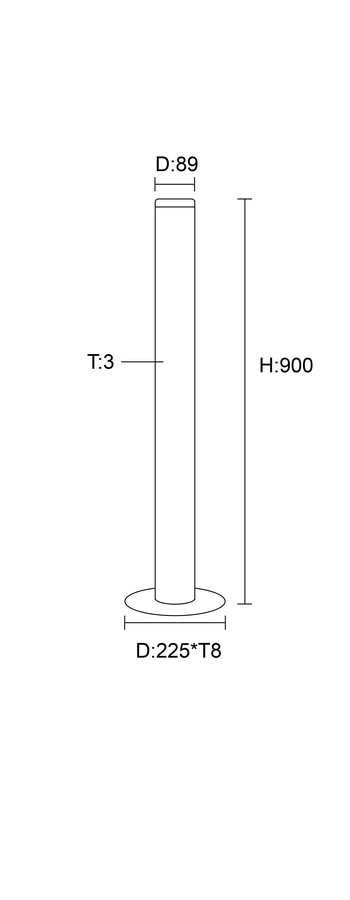
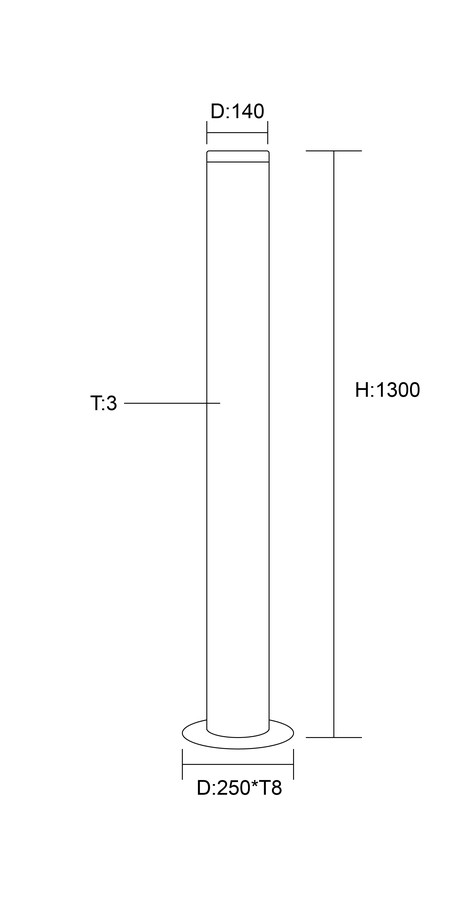
Full-size drawings available on request.
Planning a job? Fixed bollards are on pre-order for the next container (factory production typically 15–20 days, plus sea freight and customs clearance). Request a quote, or see typical bollard costs in Australia.
Avoid these
Common bollard installation mistakes
- Dusty holes. Dust stops resin bonding and can stop an anchor seating.
- Drilling too close to an edge. Concrete near an edge, joint or corner can break out. Check the datasheet's edge distance.
- Anchoring into a cracked, crumbling or thin slab. A better anchor can't fix poor concrete. Get the slab assessed.
- Skipping the services check. A drill won't stop for a conduit.
- Overtightening. It can crack the concrete or damage the anchor. Use a torque wrench.
- Loading chemical anchors early. Tightening or leaning on the bollard before the resin has cured ruins the bond.
- Installing on pavers or asphalt. Neither holds a concrete anchor. Pour a footing first.
After installation
Maintenance and after-impact checks
- Check the anchors after any hit. Look for a moving base plate, cracks around the anchors and a leaning post. If anything has shifted, get an installer to look at it rather than just re-tightening.
- Touch up powder coat chips. Bare steel rusts, and the rust spreads under the paint.
- Replace a bent bollard rather than straighten it. Straightening can weaken the steel and damage the coating, and the anchors have already taken the impact.
Not crash-rated
SafeWise bollards are safety and delineation bollards. They mark boundaries, protect against low-speed nudges and keep vehicles off areas. They are not crash-rated, and they are not impact-tested or certified to PAS 68 or IWA 14. If a site needs protection against high-speed or deliberate vehicle impact, that calls for a rated bollard on an engineered foundation.
FAQs
Bollard installation questions
What size anchors do I need for a bollard?
For SafeWise fixed bollards, use M10 concrete anchors, typically 100–150mm long depending on slab thickness. Anchors aren't included, so buy them to suit your slab. The anchor maker's datasheet sets the hole diameter, depth, edge distance and torque. If the slab is thin or old, have a qualified installer assess it first.
Should I use chemical or mechanical anchors for a bollard?
Mechanical (expansion, sleeve or wedge) anchors are quick and can be loaded straight away, which suits sound concrete well back from an edge. Chemical (resin) anchors suit edge-close positions, older or softer concrete and repeated loading, but need a clean hole and cure time before loading. If unsure, ask the anchor supplier or your engineer.
Can I install a bollard on asphalt or pavers?
Not directly. Concrete anchors don't hold in asphalt, and pavers aren't a fixing surface, so a surface-mount bollard on either needs a concrete footing or plinth underneath, with the base plate anchored into that. An engineer or experienced installer should size the footing.
How long before a chemically anchored bollard can take load?
Follow the resin's cure table. Cure time depends on the temperature of the concrete and how damp the hole is, so cold or wet conditions take longer. Don't tighten the nuts or let anything lean on the bollard until the table says the resin has cured for your conditions.
Do I need a permit to install a bollard?
On private property you usually don't need council consent, but check any strata or owners corporation rules and any planning overlay. Work on a footpath, nature strip or road reserve generally needs council consent or a permit, so check with your council before you order.
Are anchors included with the bollards?
No. SafeWise fixed bollards come with their base plate, but anchors, resin and other fixings aren't included. Buy them separately to suit your slab. SafeWise supplies product only and doesn't install.
Related products
Fixed bollards from SafeWise

Keep reading
Related guides
- Bollard spacingGaps between bollards and distance off a path
- Removable vs fixed bollardsWhich type suits the location
- How to install removable bollardsCore drilling and wet-pour in-ground sockets
- 90mm vs 140mm bollardsWhich size to choose
- Bollard cost in AustraliaGeneral price ranges, supply and install
- Driveway bollardsChoosing and placing bollards on a driveway
Need fixed bollards for a job?
Tell us your quantities and delivery postcode. We'll come back with a landed price and lead time.