
Sizing guide
90mm vs 140mm Bollards: Which Size Do You Need?
Bollard sizing comes down to two questions: what are you protecting, and what's likely to hit it? SafeWise stocks 90mm and 140mm bollards in both removable and fixed styles — here's how to pick between them.
What you'll need to decide
- What you're protecting — a doorway, a wall, a tenancy, or a pedestrian route.
- What's approaching it — foot traffic and prams, or vehicles and forklifts.
- Whether access is needed — removable if the space needs to open up sometimes, fixed if it never does.
- Site surface — new concrete, existing slab, or asphalt.
Specifications
Side by side
Figures are taken from our manufacturing drawings — use this to spec a job or compare against another supplier.
| Product | Diameter | Height | Wall | Base / Sleeve | Weight |
|---|---|---|---|---|---|
| Removable Bollard 90mm | 90mm | 900mm above ground | 3mm | Sleeve Ø102 × 4mm · cover Ø187 × 6mm | approx. 9.5kg |
| Removable Bollard 140mm | 140mm | 900mm above ground | 3mm | Sleeve Ø152 × 4mm · cover Ø214 × 6mm | approx. 13.5kg |
| Fixed Bollard 90mm | 89mm | 900mm | 3mm | Base plate Ø225 × 8mm | approx. 9.5kg |
| Fixed Bollard 140mm | 140mm | 1300mm | 3mm | Base plate Ø250 × 8mm | approx. 17.5kg |
90mm — delineation and light protection
The 90mm bollard is the general-purpose size. It's substantial enough to stop a vehicle drifting into a doorway, service riser or shopfront at low speed, and it reads clearly as a "don't drive here" marker without dominating the footpath. It's the common choice for:
- Pedestrian delineation — separating footpaths, walkways and shopfronts from vehicle areas.
- Driveway and crossover protection — guarding a garage door, meter box or wall.
- Tight sites — where a slimmer profile matters for access or aesthetics.
140mm — higher-impact areas
The 140mm bollard has a heavier profile and a larger base plate or sleeve, giving it more resistance to a harder or repeated knock. It suits areas with higher vehicle traffic or bigger vehicles moving at closer range:
- Warehouses and loading docks — protecting racking, dock doors and building corners from forklifts and trucks.
- Car park entries and ramps — where vehicles are turning or reversing near a structure.
- High-traffic commercial driveways — repeat vehicle movement over time.
Type
Removable vs fixed
Removable
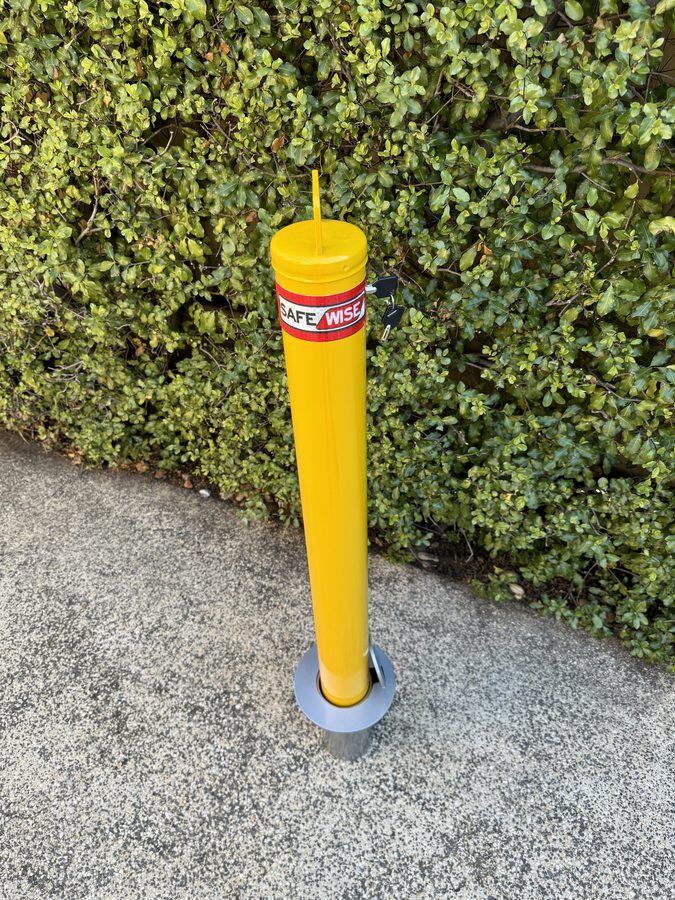
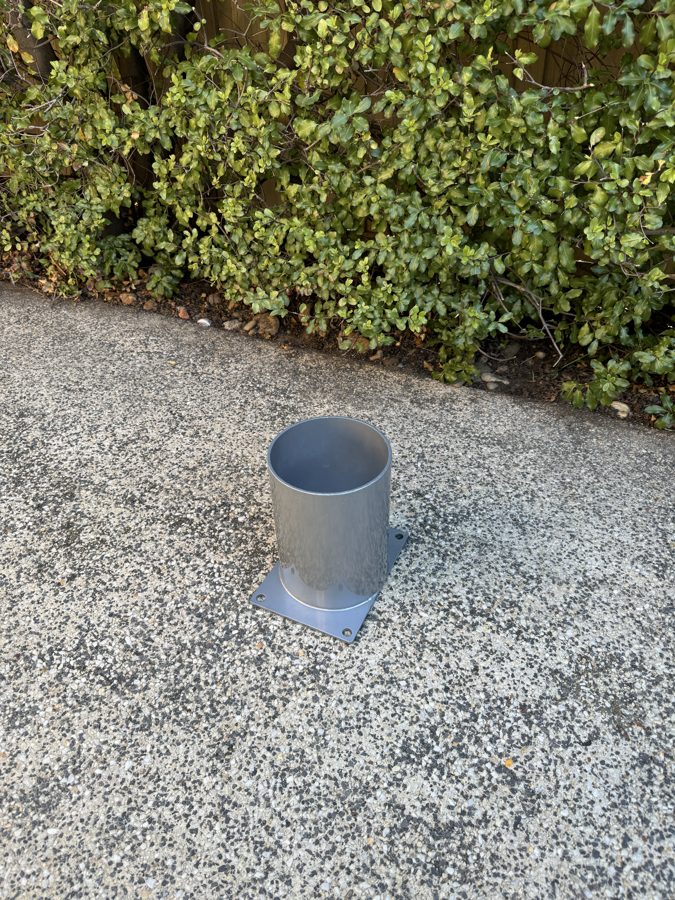
Sits in an in-ground sleeve and lifts out with the key lock, so the space can open up for deliveries, servicing or occasional vehicle access, then be secured again in seconds. Common on driveways, loading bays and any spot that needs to switch between "closed to vehicles" and "open" on a regular basis.
Fixed
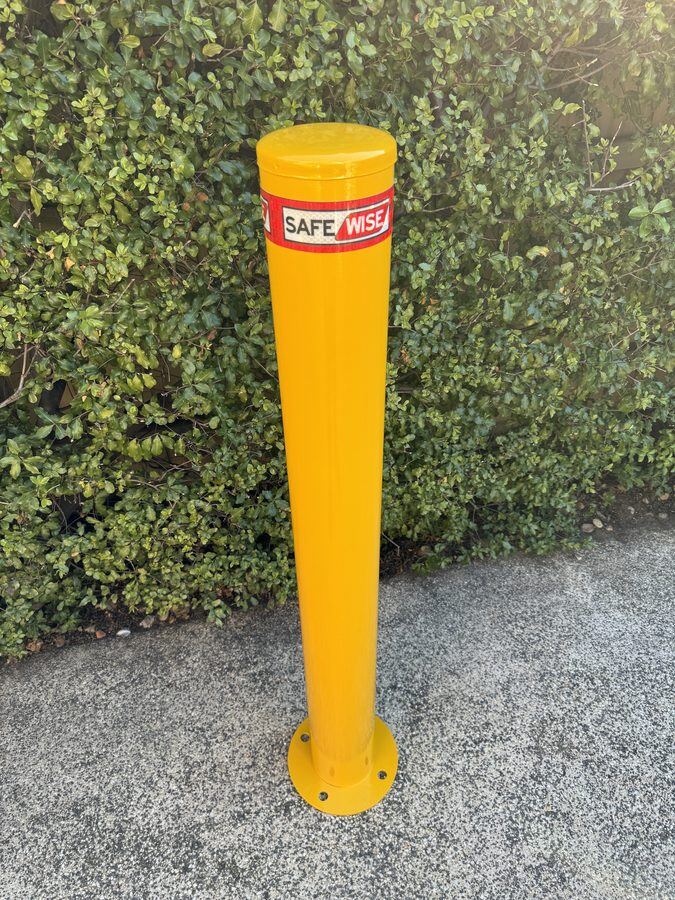
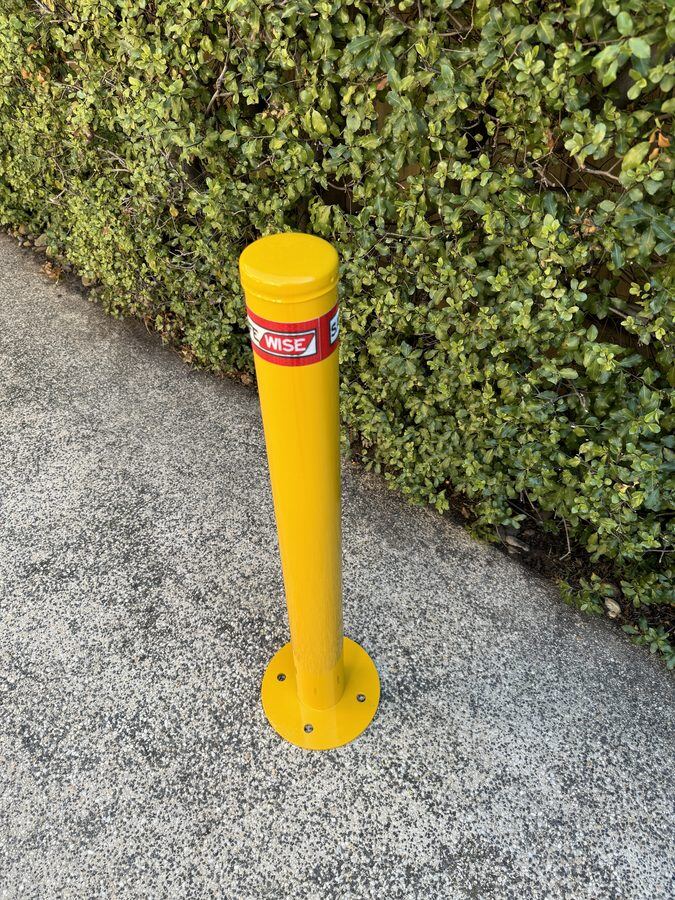
Surface-mounted with a bolted base plate — permanent protection with no moving parts to maintain. The right choice where the barrier should never come out: building corners, fixed pedestrian zones, permanent service protection.
Spacing — general guidance only
As a general rule of thumb, bollards spaced with a gap of roughly 1.2–1.5m between centres will stop a car passing through while still letting pedestrians, prams and wheelchairs move freely. This is general guidance, not a design standard — actual spacing should be set by your site designer or engineer based on the vehicles, access widths and any relevant codes for your specific site.
Related products
Shop by type
Not sure which size suits your site?
Tell us the application and we'll help you pick — then quote the quantity you need.