
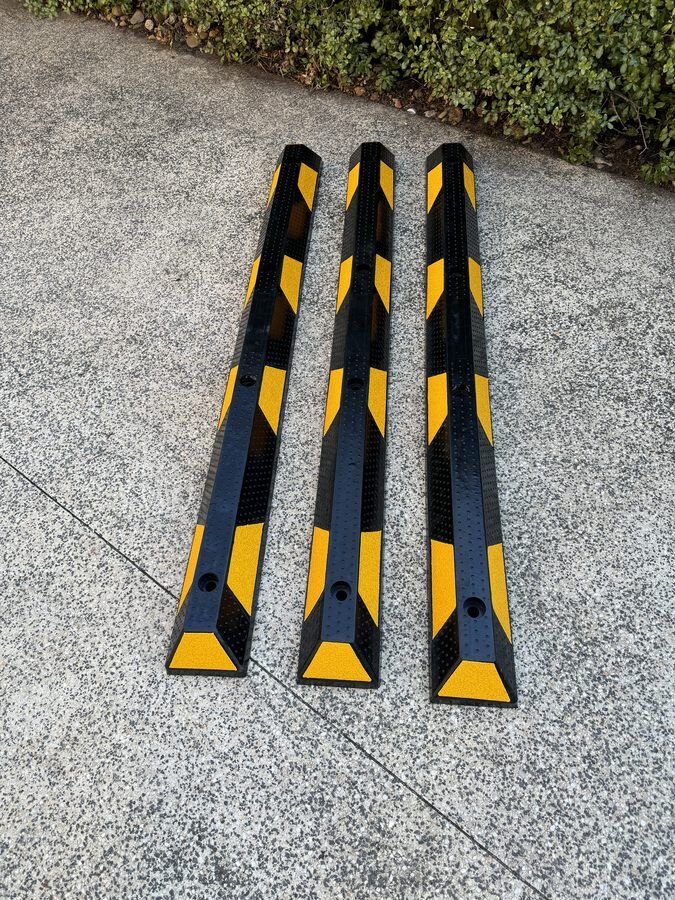
Installation guide
Wheel Stop Installation Guide
Rubber wheel stops are a simple fix, but getting the position, fixing method and spacing right makes the difference between a bay that works and one that leaves cars overhanging a footpath or nose into a wall. Here's the general approach.
What you'll need
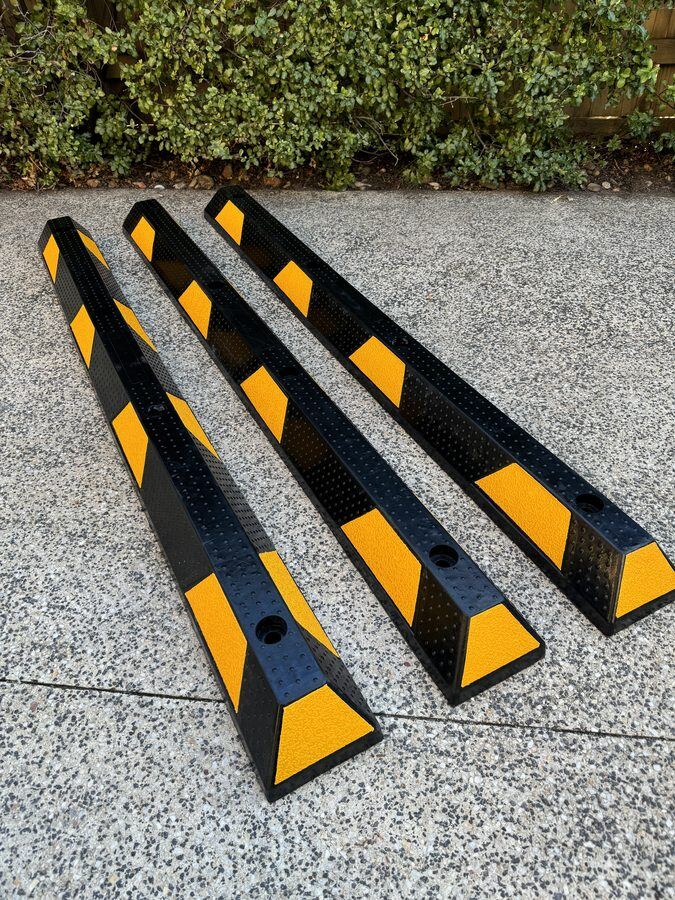
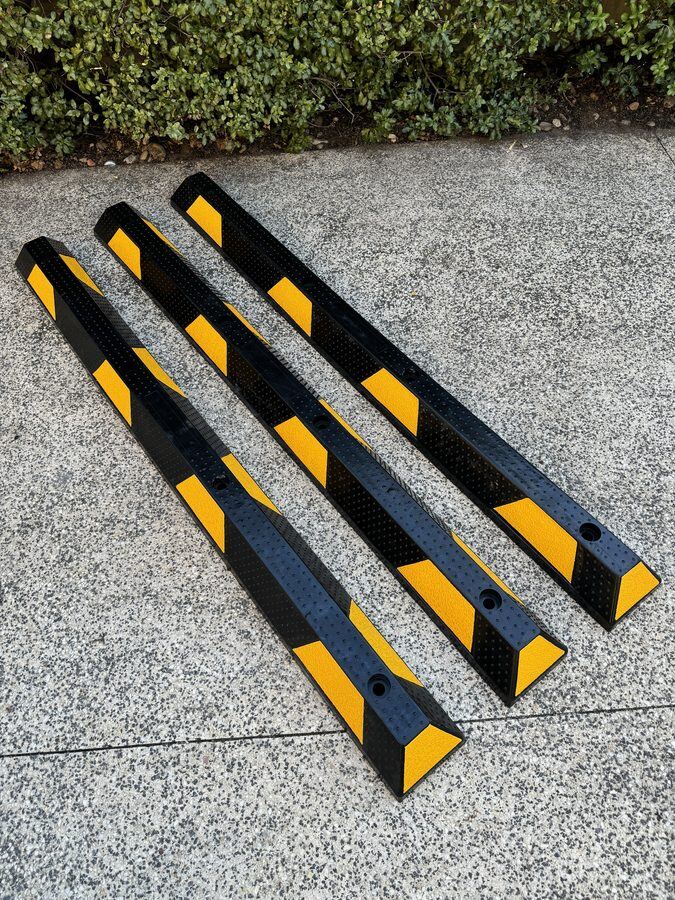
- Rubber wheel stops — 1650mm, sized to the bay.
- M10 or M12 concrete anchors for a concrete surface.
- 300mm asphalt spikes or screw anchors for asphalt or gravel.
- Hammer drill with masonry bit sized to your anchors.
- Tape measure and chalk line for marking bay layout.
- Your parking layout / engineering drawings, where available.
Method
Fitting a wheel stop
-
1. Position the wheel stop in the bay
The wheel stop sits back from the head of the bay far enough to let a parked car's front overhang sit clear of a wall, kerb, footpath or landscaped area, while still keeping the rear of the vehicle within the marked bay. Exact setback and bay dimensions for your site should follow AS2890.1 — check the standard, or your site designer's drawings, for the figure that applies to your car park rather than relying on a general rule.
-
2. Mark and square the position
Use a chalk line or tape to keep the wheel stop square to the bay line and consistent across the row — an uneven line of wheel stops is the most common install fault and it's obvious as soon as cars are parked against it.
-
3. Fix to concrete
On a concrete surface, drill through the wheel stop's moulded fixing holes and set M10 or M12 concrete anchors, tightened so the stop can't shift under a rolling wheel. Check the slab for services before drilling if there's any doubt about what's underneath.
-
4. Fix to asphalt or gravel
On asphalt or unsealed surfaces, concrete anchors won't hold — use 300mm asphalt spikes or screw-type anchors driven through the same fixing holes instead. On a thin or degraded asphalt layer, check there's enough depth of base material for the spike to bite into.
-
5. Check and repeat across the row
Once fixed, check the wheel stop doesn't rock and sits at a consistent line with its neighbours. Repeat the process bay by bay, keeping spacing from walls and kerbs consistent for the whole row.
Spacing
Spacing from walls and kerbs
As general guidance, the wheel stop should be set back from any wall, kerb or fixed structure by enough to clear a typical vehicle's front or rear overhang once parked — but the exact setback, bay length and wheel stop position for a compliant car park are set out in AS2890.1. Always check the standard, or ask your site designer or engineer for the dimensions that apply to your specific layout, rather than working to a rule of thumb.
Do not treat any figure in this guide as a substitute for AS2890.1 or your site's engineering
drawings. Where a car park needs to meet the standard for a permit, certification or council
approval, have the layout checked by your designer or engineer before fixing wheel stops in
place.
Locate underground services before drilling into concrete or asphalt — use Dial Before You Dig
(BYDA) and a scanner where there's any doubt. Engage a qualified installer for the fixing work,
and confirm bay layout and spacing against AS2890.1 or your site engineering drawings.
SafeWise supplies product only and is not responsible for installation.
Related product
Rubber wheel stops
Fitting out a car park?
Tell us the number of bays and we'll quote wheel stops and delivery to your site.