

Height guide
Bollard height in Australia: 900mm vs 1300mm and when each fits
Short answer: No single bollard height suits every site, and where a council, designer or standard sets one, theirs wins. Our bollards stand 900mm above ground (both removable sizes and the 90mm fixed) or 1300mm (the 140mm fixed), which matches the minimum commonly summarised from AS 2890.6 (2022 edition, which replaced AS/NZS 2890.6:2009; check the edition your certifier uses) for the bollard in an accessible parking shared area. We don't claim compliance, so check the band and position against the current edition of the standard. See the accessible parking bay bollard guide and the bollard standards guide.
Figures: SafeWise product data. Standards are quoted as commonly cited guidance, so check the current edition. How we check
Height decides whether a driver sees the bollard and how much leverage it puts on its base. Here is when each height suits and how to measure it.
Updated 28 October 2026
On this page: What height does · Our heights · 900mm or 1300mm · Accessible parking · Cars, utes, trucks · Mixing heights · Measuring · Limits · FAQs

The basics
What bollard height does
Height does three jobs. Diameter and the fixing decide the rest.
- Visibility from the driver's seat. A driver can only avoid what they can see. Bonnets, pillars and reversing angles hide low objects, so a taller bollard stays in view for longer.
- Presence. A taller bollard reads as an obstacle from further away. A shorter one is more of a marker.
- Leverage on the base. The higher a bollard is struck, the more turning force it puts on its anchors or socket, so the slab and fixing matter more at height.
Our range
SafeWise bollard heights
Heights come from our product specs and manufacturing drawings. The removable heights are measured above ground with the socket set flush.
| Bollard | Diameter | Height | Fitting |
|---|---|---|---|
| Removable 90mm (SW-RB90) | Ø90mm | 900mm above ground | Own in-ground socket, key lock |
| Removable 140mm (SW-RB140) | Ø140mm | 900mm above ground | Own in-ground socket, key lock |
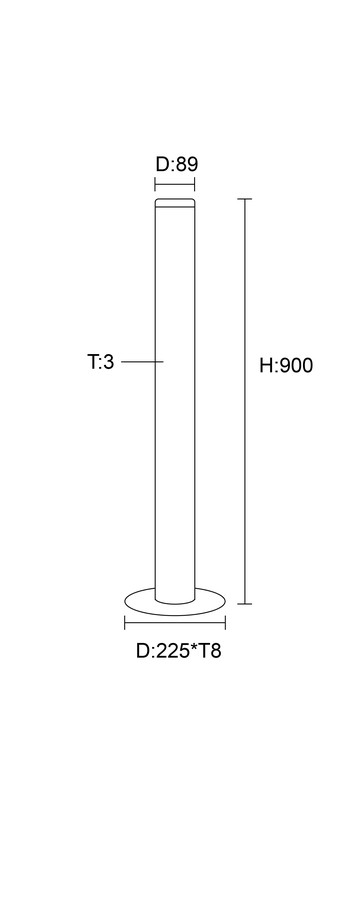
| Fixed 90mm (SW-FB90) | Ø89mm | 900mm | Surface-mount, Ø225 × 8mm base plate |
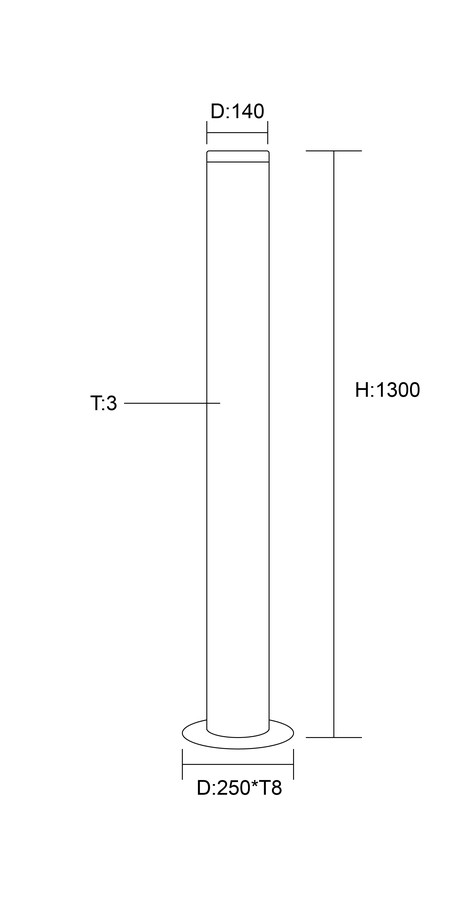
| Fixed 140mm (SW-FB140) | Ø140mm | 1300mm | Surface-mount, Ø250 × 8mm base plate |
All four are carbon steel with a 3mm wall, powder-coated safety yellow with a red reflective band. Full figures are on the product specifications.
Height is not tied to diameter
A bigger diameter doesn't mean a taller bollard. The 140mm removable stands 900mm above ground, the same as the 90mm sizes, while the 140mm fixed stands 1300mm. So treat it as two decisions: the height the site needs, then the diameter and fixing. For diameter, see 90mm vs 140mm bollards.
The drawings show the two fixed bollards at the same scale.
Choosing
When a 900mm or 1300mm bollard fits
Neither height is better. Each suits different jobs.
A 900mm bollard fits when
- You are delineating. Marking a boundary, deterring low-speed nudges at a wall or keeping vehicles off an area.
- You need a lift-out gap. Both removables are 900mm, so they match the 90mm fixed bollards.
- Drivers have a clear view. Cars with a low bonnet generally see a 900mm bollard ahead.
- Nobody has specified more. No standard, council or designer asks for taller.
A 1300mm bollard fits when
- It is the accessible parking bollard. The height matches the figure commonly specified. Check the band and position.
- Drivers sit high. Utes, vans and trucks can lose a shorter bollard below the bonnet line or cab.
- You want it seen from a distance. Corners, loading areas and angled approaches.
- A designer specifies it. The brief says 1300mm.
Taller is not automatically better. A 1300mm bollard has more leverage on its base, and it is only available fixed, so it can't be lifted out for access.
Pricing a job like this? Send sizes, quantities and your postcode.
Request a quoteAccessible parking
Bollard height for accessible parking
AS 2890.6 is commonly summarised as calling for a bollard of at least 1300mm installed height, with a reflective or contrasting band, in the shared area beside an accessible space. The accessible parking bay bollard guide covers the standard in full.
Our 140mm fixed bollard is 1300mm tall with a red reflective band, so its height matches the figure commonly specified. The 900mm bollards are shorter than that figure. We don't claim any SafeWise product complies with AS 2890.6. Height is only one part of it: the band, the position in the shared area and the fixing matter too. Check them against the current edition of the standard, and with your designer or certifier, before you order. For gaps and setbacks around bays, see our bollard spacing guide. The accessible parking bay bollard guide covers the band and position in more detail, and the bollard standards guide explains which standard applies to what.
Vehicles
Low cars, utes and trucks
Bollard height only means something against the vehicles on site. We can't give you one sight-line figure, so look at your actual traffic.
Low cars
With a low bonnet, the driver can usually see a 900mm bollard ahead. The harder moments are close in, on a tight turn or a reverse park, when it drops out of view below the bonnet line.
Utes, vans and trucks
A high cab or tall bonnet hides more of the ground in front of the driver. A 900mm bollard that is obvious from a car can sit in the blind spot of a ute, van or truck. Tow bars, trays and loads also change where the vehicle meets it. Where these vehicles use the site, a taller bollard or a different layout may suit better.
Reversing and turning
The contact a delineation bollard is there for is usually slow: a driver reversing or turning and looking elsewhere. Height and the red reflective band help them notice it. Neither makes it a barrier. Look from the driver's seat of the real vehicles before you settle on a height.
Mixed runs
Mixing bollards in one row
Runs often combine fixed bollards with removable ones at the access gap. Height decides whether the row reads as one line.
| Combination | Heights | Match? |
|---|---|---|
| Fixed 90mm with removable 90mm | 900mm and 900mm | Yes |
| Fixed 90mm with removable 140mm | 900mm and 900mm | Yes, but the diameters differ |
| Removable 90mm with removable 140mm | 900mm and 900mm | Yes, but the diameters differ |
| Fixed 140mm with any other bollard | 1300mm and 900mm | No: the fixed 140mm is 400mm taller |
For a level top line, stay with the 900mm group: the 90mm fixed and both removables. A 140mm fixed bollard in a 900mm row stands out by 400mm. That can be deliberate, such as one tall bollard at an accessible bay, but make it a decision. See removable vs fixed bollards for how the two types work together.
Measuring
How to measure bollard height
Always measure from the finished surface, then check it with a tape once the bollards are in.
-
Find the finished surface
Take height from the top of the slab, paver or asphalt the bollard stands in or on. Toppings and cross-fall move where “ground” is.
-
Removable: height above ground
The 900mm is the part of the bollard above the finished surface once it is seated in its socket. The socket and the section below ground aren't counted. Set the socket flush: if it sits proud or low, the visible height changes by the same amount. See how to install removable bollards.
-
Fixed: confirm the reference point
Our fixed heights are the overall bollard heights on the manufacturing drawings. If your design or certifier sets a hard minimum measured from the slab surface, tell us when you enquire and we will confirm the figure before you order.
-
Tape it on site
Measure the installed bollard, not the drawing. If a certifier or council will check the height, record it.
Who decides
Who sets the height, and what height can't do
- Council. Footpaths, nature strips and road reserves generally need council consent, and councils may specify bollard type and height on public land. Ask before you order: see council approval for bollards.
- Designer or certifier. On accessible parking and required access routes, your designer, building surveyor or access consultant sets the requirement.
- Strata or owners corporation. Common property needs approval first.
- You, on private property. Choose for the vehicles and the risk. Don't block emergency access or a right-of-way.
Height doesn't add strength
SafeWise bollards are safety and delineation bollards: they mark boundaries, deter low-speed nudges and keep vehicles off an area. They are not crash-rated, impact-tested or certified to PAS 68 or IWA 14, at 900mm or 1300mm. A taller bollard is easier to see, not stronger. If the risk is a heavy vehicle at speed or a hostile vehicle, a security engineer specifies tested bollards on engineered foundations. We don't sell those.
FAQs
Bollard height questions
What is the standard bollard height in Australia?
There is no single figure for every site. Where a council, designer or standard sets a height, such as the bollard in an accessible parking shared area, that height applies. We supply 900mm and 1300mm bollards.
How tall are SafeWise bollards?
The 90mm and 140mm removable bollards stand 900mm above ground, and so does the 90mm fixed bollard. The 140mm fixed bollard is 1300mm tall. All have a red reflective band.
What height bollard does an accessible parking space need?
AS 2890.6 is commonly summarised as calling for a bollard in the shared area beside an accessible space, at a minimum installed height of 1300mm with a reflective or contrasting band. Our 140mm fixed bollard is 1300mm tall, but we don't claim compliance. Check the band and position against the current edition of the standard.
Is a 900mm bollard tall enough?
For delineation at low speed it often is, where drivers can see it. Utes, vans and trucks can lose a 900mm bollard in the blind spot in front of the cab, so check from the driver's seat.
Can I mix 900mm and 1300mm bollards in one row?
Yes, but the 140mm fixed bollard will stand 400mm above the 900mm bollards. The 90mm fixed and both removable sizes are all 900mm, so those match. Mix heights only when you intend to.
How is removable bollard height measured?
As the height above the finished surface once the bollard is seated in its socket, which is set flush. The socket and the part below ground aren't counted.
Does a taller bollard stop a vehicle better?
No. A taller bollard is easier to see and has more leverage on its base, but it isn't stronger. SafeWise bollards are delineation bollards, not crash-rated, at either height. For heavy or hostile vehicles, talk to a security engineer.
Related products
Bollards at each height


Bollards are pre-order on the next container: factory production typically takes 15–20 days, plus sea freight and customs. Storage holders are in stock now.
Choosing between 900mm and 1300mm?
Tell us the bollard type, how many, the vehicles on site and your delivery postcode. We aim to reply within one business day.
Keep reading
Related guides
- Bollard spacingGaps, centres and setbacks
- Accessible parking bay bollardsHeight, band and position
- Bollard standards in AustraliaWhat applies, and what doesn't
- 90mm vs 140mm bollardsWhich diameter suits the job
- Removable vs fixed bollardsLift-out or permanent
- Driveway bollardsMarking a driveway or garage door
- How to install removable bollardsSockets, coring and set-out
- Car park safety checklistBollards, wheel stops and markings
- Safety vs crash-rated bollardsWhat the ratings mean
- Shopfront bollardsWhat they stop, and what they don't
- Car park bollardsWhich height suits each part of the car park
- Surface-mount vs in-ground bollardsBolted on top, or set into the slab