

Accessible parking guide
Accessible parking bay bollards: height, band and position
Short answer: AS 2890.6 (2022 edition, which replaced AS/NZS 2890.6:2009; check the edition your certifier uses) is commonly summarised as calling for a bollard in the shared area beside an accessible parking space, about 1300mm tall with a reflective or contrasting band. The SafeWise 140mm fixed bollard is 1300mm tall with a red reflective band. Check the band and position against the current edition. SafeWise makes no compliance claim.
Figures: SafeWise product data. Standards are quoted as commonly cited guidance, so check the current edition. How we check
What the bollard in the shared area is for, the figures commonly quoted and what to check before you order.
Updated 28 October 2026
On this page: Shared area · Height and band · Which edition · Fixed or removable · Installation · Who decides · Checklist · FAQs
Height and band
Height and reflective band
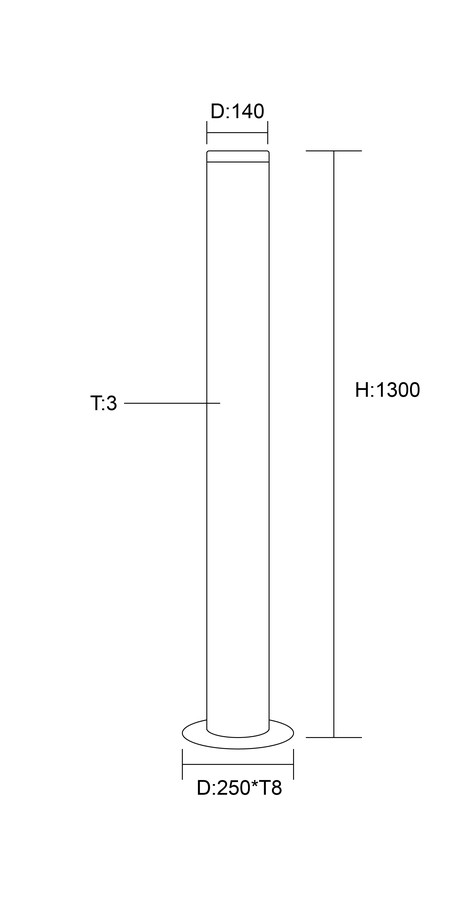
Industry guides commonly summarise AS 2890.6 as calling for the bollard to stand about 1300mm above the surface, with a reflective or contrasting band so it can be seen. The SafeWise 140mm fixed bollard (SW-FB140) is 1300mm tall and has a red reflective band, so its height matches the figure commonly specified.
We haven't published the band's width or its colour contrast, so we can't tell you whether it meets any particular reading of the standard. If your certifier needs those figures, ask us and we'll tell you what we can confirm. Position matters as much as height, so check both against the edition your certifier uses. We make no compliance claim.
| Spec | SW-FB140 |
|---|---|
| Diameter | Ø140mm |
| Height | 1300mm |
| Base plate | Ø250 × 8mm |
| Weight | About 17.5kg |
| Finish | Powder-coated safety yellow |
| Band | Red reflective band |
| Price | From $110 ex GST ($121 inc GST), ex freight |
Edition
Which edition: AS 2890.6:2022 or the older 2009 version
AS 2890.6 is listed as the current Australian edition (see the Standards Australia listing). Many suppliers' pages and older drawings still cite AS/NZS 2890.6:2009. The 1300mm height and reflective band are how the requirement is commonly summarised, but check the clause in the edition your certifier works from rather than relying on a summary, including this one.
For how this sits alongside the other documents that touch bollards and wheel stops, see the bollard standards guide.
Fixed or removable
Fixed or removable at an accessible bay
A removable bollard lifts out of an in-ground socket with a key. Both SafeWise removable bollards stand 900mm above ground, which is a different height from the 1300mm figure above. Don't assume a removable bollard fits an accessible bay because it looks similar. If you need a removable bollard in the shared area for access, ask your certifier first. The removable vs fixed guide covers the trade-offs, and the bollard height guide explains 900mm against 1300mm.
Installation
Fixing the bollard
- Surface mount. The fixed bollard bolts to the slab through its base plate. M10 concrete anchors, typically 100–150mm long depending on the slab, are the usual fixing. Anchors are not included.
- Check the slab. A thin or old slab needs an installer's assessment before you drill.
- Locate services first. Lodge a Before You Dig Australia enquiry and use a scanner before drilling.
- Set-out. See how to install fixed bollards for the steps.
Who decides
Who decides what an accessible bay needs
Not us, and not a supplier's summary. The requirement for a particular site is set by your designer, your building certifier or surveyor and, on public land, your council. Common property in a strata scheme also needs owners corporation approval. See council approval for bollards for who to ask. If you are marking reserved bays rather than accessible ones, the reserved parking bollards guide is the better fit.
SafeWise bollards are safety and delineation bollards. They are not crash-rated or impact-tested, so they keep a space clear of parked cars but are not a barrier against a vehicle at speed.
Need the 140mm fixed bollard for a bay? Send the quantity and your postcode.
Request a quoteBefore you order
Checks before you order an accessible bay bollard
1. Confirm the edition
Ask your certifier or designer which edition of AS 2890.6 applies to the job, and whether the drawings cite the older 2009 version.
2. Confirm the bollard height
Check the height the drawings call for against the bollard you plan to use. The 140mm fixed bollard is 1300mm tall. The 90mm fixed and both removable bollards stand 900mm.
3. Confirm the band and position
Check the band and where the bollard sits in the shared area. Send us the question if you need a figure we haven't published.
4. Check the slab and services
Look at the slab thickness for the anchors, and lodge a BYDA enquiry before drilling.
5. Get approval and a written quote
Get any council or owners corporation approval first. Bollards are pre-order on the next container, so the quote gives the expected landing date.
FAQs
Accessible parking bollard questions
What height should a bollard be at an accessible parking space?
AS 2890.6 is commonly summarised as calling for a bollard in the shared area beside an accessible space at about 1300mm installed height, with a reflective or contrasting band. Check the edition your certifier uses. The SafeWise 140mm fixed bollard is 1300mm tall, but we make no compliance claim.
Does the SafeWise 140mm fixed bollard comply with AS 2890.6?
We don't claim compliance. The bollard is 1300mm tall with a red reflective band, which matches the height commonly cited. We haven't published the band width or its contrast, and position is set by your designer or certifier, so check them against the edition that applies.
Can I use a removable bollard in an accessible parking bay?
Ask your certifier first. SafeWise removable bollards stand 900mm above ground, which is a different height from the 1300mm figure commonly cited for the shared area, so don't assume they fit.
Is AS 2890.6:2022 different from the 2009 version?
AS 2890.6 (2022 edition) replaced AS/NZS 2890.6:2009 in Australia. Many suppliers still cite the older version, so check which edition your certifier works from rather than relying on a summary.
What fixings does the 140mm fixed bollard need?
M10 concrete anchors, typically 100 to 150mm long depending on the slab, through the Ø250 × 8mm base plate. Anchors are not included. A thin or old slab needs an installer's assessment, and you should locate services before drilling.
Related products
Bollards for the job


Bollards are pre-order on the next container: factory production typically takes 15–20 days, plus sea freight and customs. Storage holders are in stock now.
Planning an accessible bay?
Send us the quantity and your delivery postcode, and the spec sheet for the 140mm fixed bollard goes with the quote. We aim to reply within one business day.
Keep reading
Related guides
- Bollard standards in AustraliaWhat applies, and what doesn't
- Bollard height in Australia900mm vs 1300mm and when each fits
- Bollard spacingGaps, centres and setbacks
- Lockable parking bollardsReserving a bay
- How to install fixed bollardsSet-out, anchors and slab checks
- Removable vs fixed bollardsLift-out or permanent
- Car park safety checklistA checklist for walking a car park
- Council approvalWho to ask, by where the bollard goes